
Migrating to SAP S/4HANA Cloud is a crucial step for organizations aiming to modernize their ERP systems and harness the power of real-time analytics, improved performance, embedded AI, and streamlined operations. However, this transformative process is intricate, and errors along the way can lead to project delays, cost overruns, and business disruptions. Understanding the common pitfalls and adopting strategies to mitigate them can pave the way for a smooth migration.
1. Inadequate Planning and Strategy
One of the most significant missteps in S/4HANA migration is a lack of thorough planning and strategy development. This often results in undefined goals, unclear migration roadmaps, and misaligned team expectations.
Why It Happens
- Overconfidence in existing system knowledge.
- Underestimation of the complexity of S/4HANA Cloud's architectural options and capabilities.
- Insufficient evaluation of existing processes and data.
How to Avoid It
- Conduct a Comprehensive Readiness Assessment: Review your current SAP environment, identifying technical, operational, and data-related challenges.
- Define Clear Migration Objectives: Specify goals like improved system performance, cost reductions, AI use-cases, or enhanced compliance.
- Select an Appropriate Deployment Approach: Choose between Greenfield (new implementation with SDT), Brownfield (system conversion, only for self-managed private cloud), or Hybrid based on your organization's unique needs.
2. Overlooking Data Management
Data management is often underestimated during migration. Migrating redundant, outdated, or low-quality data can inflate costs, slow down the process, and degrade the system's performance post-migration.
Why It Happens
- Absence of a structured data cleansing process.
- Lack of prioritization for data archiving.
- Underestimation of the scale and complexity of legacy data.
How to Avoid It
- Archive Before Migrating: Implement tools and services like Neev's Data Archiving as a Service (DAaaS) to cleanse and archive inactive or outdated data before migration. This reduces the system footprint and improves migration efficiency.
- Focus on Relevant Data: Separate high-value business data from low-value historical data to ensure only essential data is moved to S/4HANA.
- Automate Data Preparation: Leverage automated tools to handle repetitive data tasks, ensuring accuracy and consistency while reducing manual intervention.
- Enable Transparent Data Access Post-Migration:Leverage RISE or GROW compatible cloud solutions such as the Neev Content Suite in Cloud, that provide seamless access to archived data, allowing users to retrieve information when needed without overloading the new system.
3. Neglecting Stakeholder Involvement
S/4HANA migration is more than a technical upgrade — it's a business transformation. Excluding key stakeholders from early planning stages often results in resistance, miscommunication, and operational setbacks.
Why It Happens
- Perception that migration is solely an IT responsibility.
- Insufficient collaboration between departments.
- Lack of executive buy-in and support.
How to Avoid It
- Engage Early: Include stakeholders from IT, finance, operations, and compliance teams in initial planning.
- Communicate Goals: Regularly update stakeholders about project objectives, timelines, and benefits.
- Secure Leadership Advocacy: Ensure that executives actively support and communicate the importance of the migration to the broader organization.
4. Underestimating Customization Challenges
Many organizations heavily customize their legacy SAP systems. These customizations can create compatibility challenges during migration, particularly if they deviate significantly from S/4HANA's standardized processes.
Why It Happens
- Poor documentation of existing customizations.
- Reliance on custom code for unique business requirements.
- Limited awareness of S/4HANA's built-in capabilities.
How to Avoid It
- Conduct Custom Code Analysis: Utilize SAP's Custom Code Migration App to identify incompatible or obsolete customizations.
- Adopt a Clean Core Approach: Minimize customizations by leveraging native S/4HANA capabilities and tier 1 extensions through SAP BTP (Business Technology Platform).
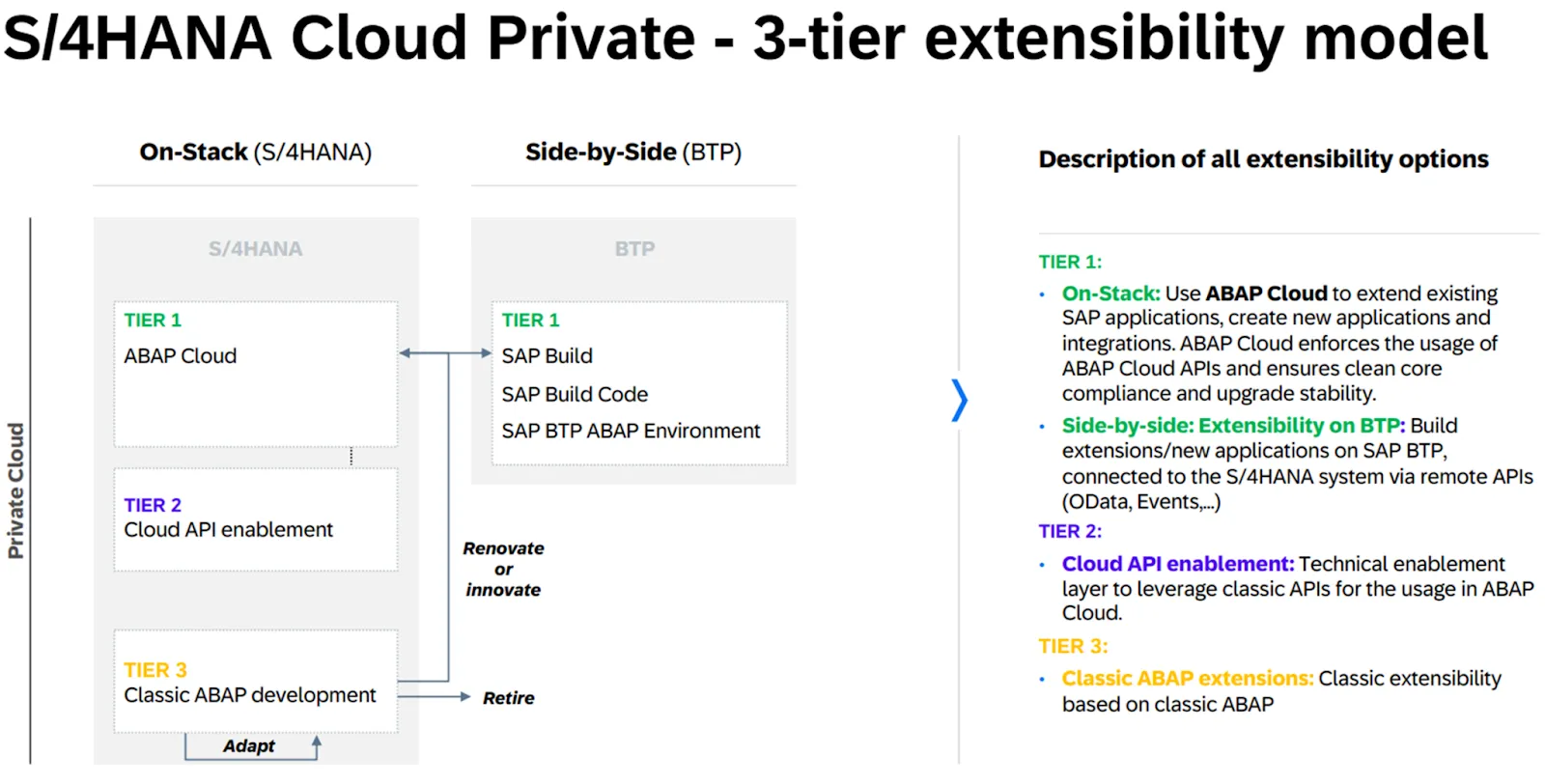
- Document and Evaluate: Reassess all existing customizations to determine their relevance and alignment with S/4HANA's standard processes.
5. Insufficient Testing and Training
Skipping or rushing through testing phases and employee training can lead to system failures, business disruptions, and low adoption rates after go-live.
Why It Happens
- Unrealistic project timelines.
- Inadequate focus on end-user readiness.
- Limited investment in robust testing frameworks.
How to Avoid It
- Implement End-to-End Testing: Conduct unit, integration, and performance testing to identify and address issues proactively. Do not forget to include archived data and attachments when preparing test cases. You can utilize tools like Neev's Content Migration tool to do selective archived data and attachment copy back into sandbox instances.
- Prioritize Employee Training: Develop role-specific training programs to ensure users are comfortable with S/4HANA's new interface and workflows.
- Use a Phased Rollout: Deploy S/4HANA incrementally, beginning with non-critical systems to identify potential issues while minimizing disruptions.
Advanced Archiving Strategies: Essential for Successful Migrations
Data archiving plays a critical role in ensuring the success of an S/4HANA migration. Incorporating advanced archiving techniques as part of your migration strategy offers numerous benefits:
Why Archiving Matters
- Optimizing Costs: Moving inactive data to cost-effective storage solutions (e.g., cloud or nearline storage) significantly reduces operational expenses.
- Enhancing Performance: Large datasets can slow down system performance. Archiving ensures active systems are lean and optimized for speed.
- Meeting Compliance Requirements: Archiving helps businesses retain historical data to comply with industry and regulatory standards without overloading the new system.
- Streamlining the Migration Process: Smaller datasets are easier and faster to migrate, reducing the overall migration timeline.
Leveraging Neev's Archiving Solutions
Neev's Content Suite in SAP and DAaaS (Data Archiving as a Service) offers:
- SAP-Certified Archiving Tools: Seamlessly manage data archiving processes using SAP-native objects.
- Automation for Repetitive Tasks: Automate data classification and archiving activities to improve accuracy and reduce effort.
- Customizable Retention Rules: Apply industry-specific retention policies to ensure compliance.
- Transparent Data Access: Enable seamless retrieval of archived data post-migration, ensuring business continuity.
Key Takeaways for a Seamless Migration
- Start with a robust planning and readiness assessment.
- Prioritize data management, including cleansing and archiving.
- Engage stakeholders and secure leadership support early on.
- Minimize unnecessary customizations and adopt a clean core approach.
- Invest in comprehensive testing and training programs.
- Leverage advanced data archiving solutions like Neev's DAaaS to reduce costs, optimize performance, and streamline the migration process.
Conclusion
S/4HANA migration is a transformative opportunity that requires meticulous planning, strategic decision-making, and proactive execution. By avoiding common pitfalls and integrating advanced archiving solutions, businesses can ensure a seamless transition while unlocking the full potential of S/4HANA.
At Neev Data, we specialize in simplifying S/4HANA migrations through tailored solutions, from data preparation to post-migration optimization. Ready to take the next step in your journey? Contact us today to learn how we can make your migration a success.