
For organizations running complex systems like SAP, uncontrolled data growth can significantly impact system performance, inflate storage costs, and strain IT resources. Data Volume Management (DVM) provides a structured approach to managing business data throughout its lifecycle—ensuring that systems remain efficient, scalable, and cost-effective.
While many organizations understand the importance of data management, they often struggle with implementing a clear strategy that balances performance, compliance, and long-term sustainability. This blog explores the key components of an effective DVM strategy, its impact on system efficiency, and best practices that businesses can adopt to ensure data remains an asset rather than a liability.
Understanding Data Volume Management (DVM)
DVM focuses on optimizing the storage, accessibility, and lifecycle of data within enterprise systems like SAP. Without a well-defined strategy, data accumulates over time, slowing system performance, increasing infrastructure costs, and complicating compliance efforts.
A comprehensive DVM approach consists of:
- Data Tiering (only S/4HANA): Classifying data into hot (frequently accessed), warm (infrequently used), and cold (rarely accessed) storage tiers.
- Data Archiving: Moving static, business-complete data to cost-effective archival storage.
- Data Retention Management: Enforcing policies that define how long data must be kept for compliance purposes.
- Data Aging (only S/4HANA): Separating active data from historical data to enhance processing speed.
- Legacy System Decommissioning: Retiring outdated systems while maintaining access to critical historical data.
When implemented effectively, these strategies improve system performance, optimize costs, and ensure regulatory compliance, all while maintaining seamless access to critical business information.
Why Data Volume Management Matters
As businesses generate more data than ever before, maintaining an efficient and lean SAP environment is crucial. A poorly managed data landscape leads to several operational challenges:
1. Performance Bottlenecks
SAP systems slow down when burdened with excessive, outdated, or redundant data, impacting business-critical functions such as transaction processing and reporting.
2. Rising Storage & Infrastructure Costs
Keeping all data in expensive high-performance storage is costly and inefficient. Without data archiving and tiering, businesses end up paying for storage they don't actually need.
3. Compliance & Legal Risks
Data privacy laws like GDPR, CCPA, and industry-specific regulations mandate organizations to retain and purge data according to strict guidelines. Failure to comply can lead to legal consequences, audits, and penalties.
4. Complexity in System Migrations
Moving from SAP ECC to S/4HANA or transitioning to cloud-based environments becomes more complex and costly when businesses fail to streamline their data landscape beforehand.
5. Challenges in Data Accessibility
Employees often struggle to locate relevant information in cluttered databases. Without structured archiving and search capabilities, businesses lose efficiency and valuable insights.
Key Strategies for Effective Data Volume Management
Implementing a structured DVM strategy requires organizations to take a proactive approach in organizing, archiving, and optimizing data storage. Below are key best practices for businesses looking to improve operational efficiency through better data management.
1. Data Tiering in S/4HANA for Cost-Effective Storage
Not all data needs to reside in expensive, high-performance databases. Classifying data into hot, warm, and cold tiers ensures that frequently accessed data remains in fast storage while historical data moves to cost-effective archival storage.
✅ Best Practice: Due to the complexity of this option, utilize SAP's out-of-the-box data tiering to classify and manage data efficiently, but do not alter it. Tiering does not reduce the system footprint—archiving does, and there are ample opportunities to tweak your archiving strategy as per your organization's usage pattern.
2. Utilize Data Aging for Faster System Performance in S/4HANA
SAP's Data Aging framework helps separate frequently used data from historical data—keeping memory-intensive processes efficient without compromising accessibility.
✅ Best Practice: Configure Data Aging Objects to move less frequently accessed data to optimized storage. But, like tiering, due to the complexity of this option, utilize SAP's out-of-the-box data aging setup. Aging also does not reduce the system footprint—archiving does.
3. Automate Data Archiving
Archiving is still the most mature SAP data footprint reduction framework. Regularly archiving static or business-complete data improves system performance and reduces infrastructure costs. Archival solutions automatically move inactive data to on-premise or cloud storage while maintaining accessibility for audits and reporting.
✅ Best Practice: SAP's ADK (Archive Development Toolkit) framework along with partner extensions help enforce automated data archiving.
4. Optimize Data Retention & Legal Hold Management
Every industry has specific regulations governing how long data should be retained before deletion. Implementing automated retention policies helps ensure compliance while avoiding unnecessary data storage costs.
✅ Best Practice: Use Neev's Content Compliance (a simple data retention and privacy tool within ECC or S/4HANA), and optionally SAP ILM (in case your organization has invested in this component in SAP) to define and enforce data retention rules for compliance with GDPR, HIPAA, and other global regulations.
5. Streamline Legacy System Decommissioning
Decommissioning legacy systems often leads to data access challenges and compliance risks. Proper data extraction, archival, and migration strategies help ensure that historical records remain searchable and secure after system retirement.
✅ Best Practice: Migrate decommissioned system data to cost-effective storage while maintaining access through cloud-native archived data and document search tools.
How Neev Data Supports Efficient DVM Implementation
Implementing a successful DVM strategy requires expertise in SAP archiving, compliance frameworks, and enterprise-wide data management. Neev Data provides tailored solutions designed to help businesses:
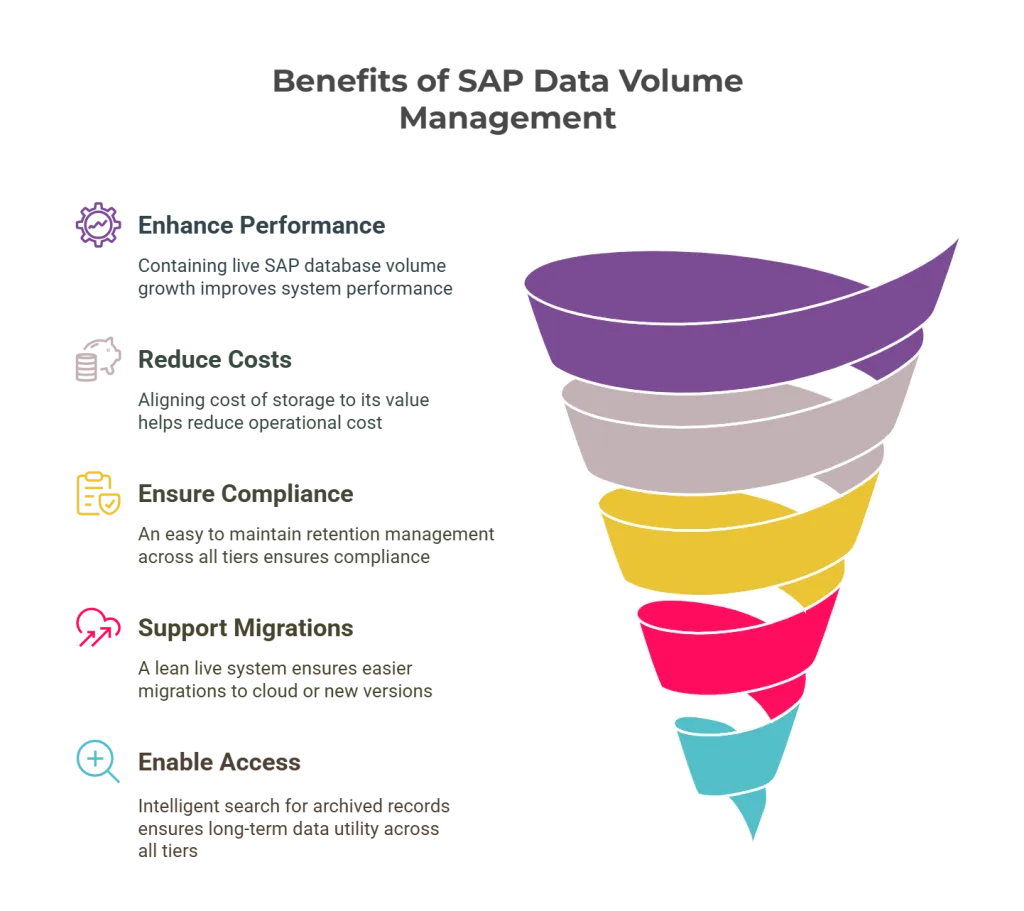
✔ Enhance SAP Performance – Streamline operations by reducing data volume without disrupting workflows.
✔ Reduce Storage Costs – Implement automated tiering and archiving to lower infrastructure expenses.
✔ Ensure Compliance – Maintain audit readiness with proper data retention and legal hold enforcement.
✔ Support S/4HANA Migrations – Prepare systems for SAP upgrades by cleansing and optimizing data.
✔ Enable Seamless Data Access – Retain historical records with intelligent search capabilities for archived content.
With proven expertise in SAP data lifecycle management, Neev Data helps businesses future-proof their operations while minimizing costs and compliance risks.
The Need for a Proactive DVM Approach
Data growth is inevitable, but managing it efficiently is a choice. Organizations that implement structured Data Volume Management strategies experience better system performance, lower costs, and stronger compliance.
For enterprises running SAP, DVM is not just an optimization tool—it's a necessity. Whether preparing for S/4HANA migration, tackling compliance challenges, or simply looking to reduce operational costs, a well-planned DVM strategy ensures long-term success.
Want to sustain your SAP operations and reduce costs? Contact Neev Data today and discover how our tailored DVM solutions can empower your organization to run smarter, leaner, and more efficiently.